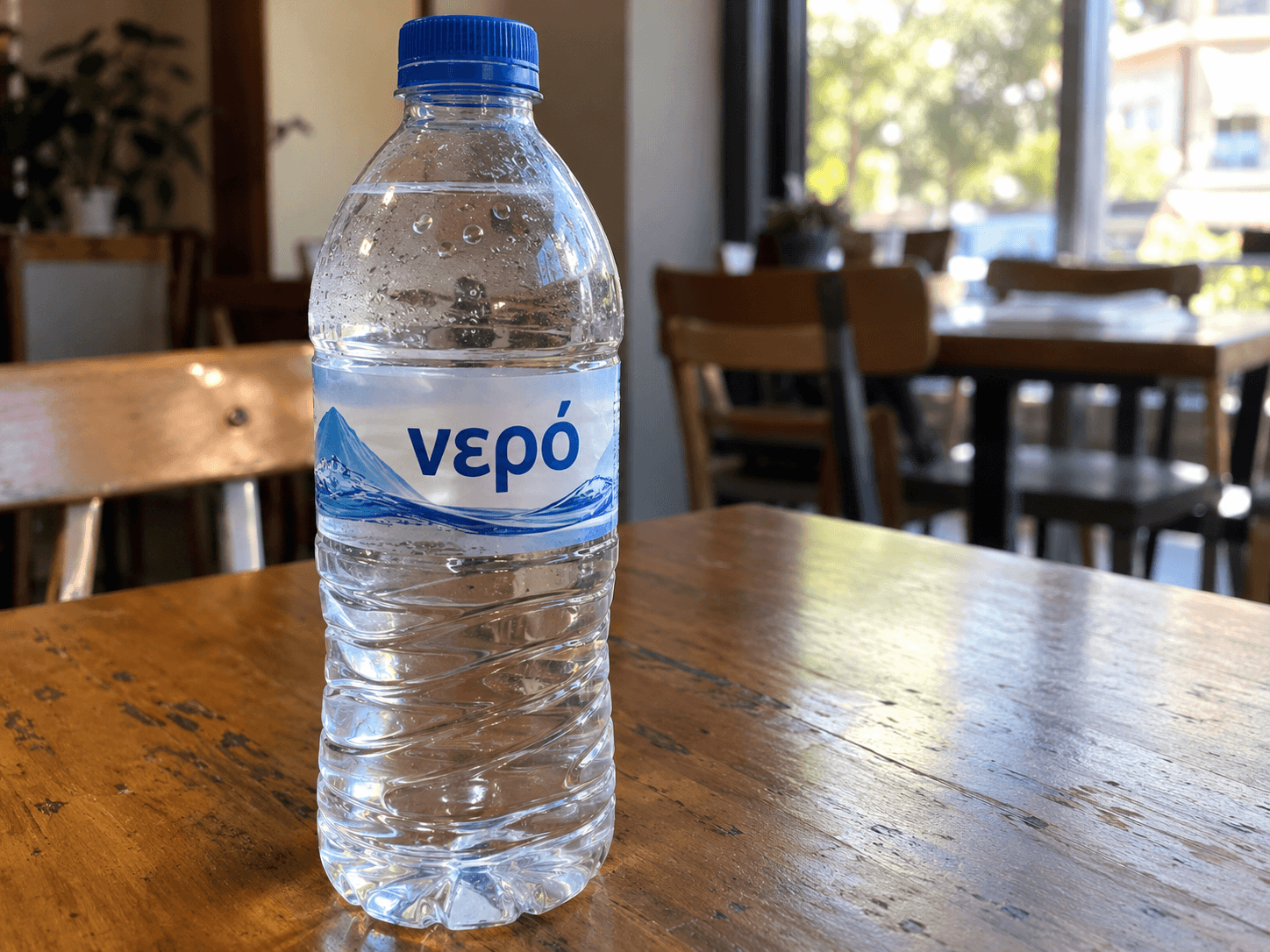
You see νερό on a bottle or έξοδος above a door. How do you turn those letters into sounds? Start with the Modern Greek alphabet, then learn the combinations and the accent mark. This guide gives you a short reading practice to try.
We focus on Modern Greek, the language spoken in Greece today. Reading a word aloud and understanding its meaning are separate skills: you can practise pronunciation while gradually building your vocabulary.
1. Learn letter sounds alongside their names
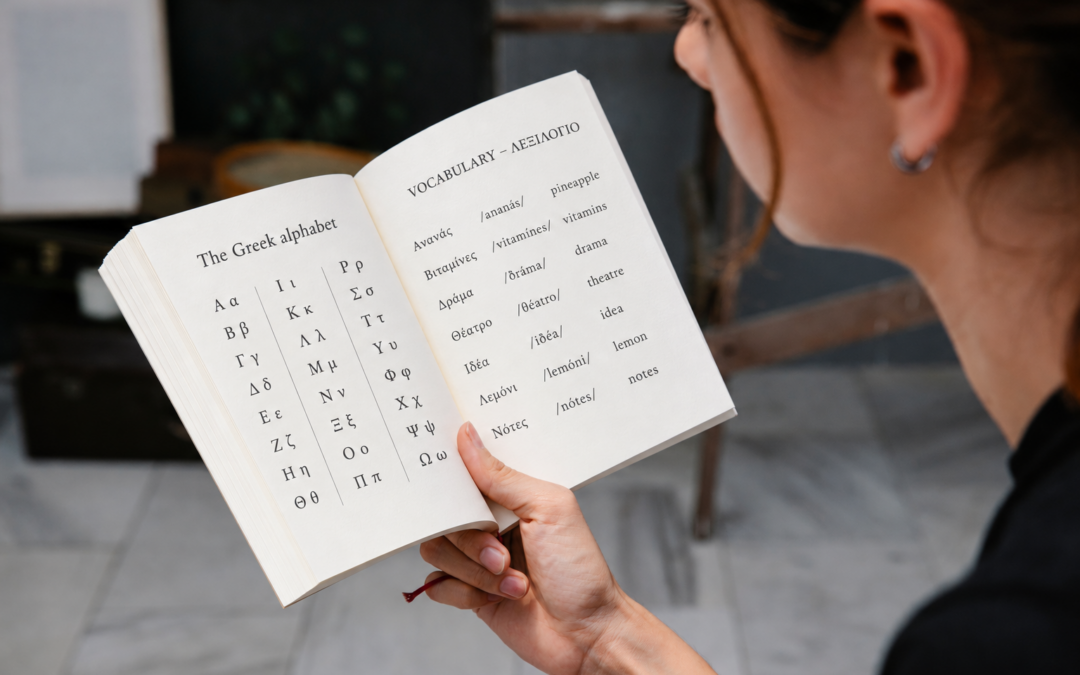
The Greek alphabet has 24 letters. Learn both capital and lowercase forms, but practise the sound of each letter inside a word rather than only reciting the alphabet.
Some letters look familiar but sound different from English. These are useful ones to notice:
Β β
Sound: /v/, as in “very”
Example: βάζο — vase
Η η
Sound: /i/, approximately as in “see”
Example: ήλιος — sun
Ρ ρ
Sound: /r/, a tapped or rolled r
Example: νερό — water
Ν ν
Sound: /n/, as in “no”
Example: ναι — yes
Θ θ
Sound: /θ/, as in “think”
Example: θέλω — I want
Δ δ
Sound: /ð/, as in “this”
Example: δώρο — gift
Σ σ ς
Sound: /s/, as in “see”
Example: σπίτι — house
Lowercase sigma has two forms: σ inside a word and ς at the end. English comparisons are approximate; listening to a Greek speaker helps you hear the details.
2. Read common vowel combinations as a unit
Two letters do not always mean two separate sounds. Learn these common combinations early:
αι
Sound: /e/
Example: ναι /ne/ — yes
ει
Sound: /i/
Example: είμαι /íme/ — I am
οι
Sound: /i/
Example: οίκος /íkos/ — house; a formal word
ου
Sound: /u/
Example: πού /pu/ — where
The sound /i/ has several spellings in Greek. Recognising them helps you read; choosing the correct spelling when writing takes vocabulary practice too.
The diaeresis mark can separate vowels that you might otherwise read together. Compare παιδί with Μαΐου: in the second word, the marked ϊ is pronounced separately from the α.
3. Notice the accent mark before you read
The accent tells you which syllable to stress. In νερό /neró/, stress the final syllable. In δώρο /ðóro/, stress the first.
We use the same learner-friendly pronunciation notation as our course vocabulary sheets. A written accent inside the slashes marks the stressed vowel: for example, λεμόνι /lemóni/. The symbol /ð/ represents the sound at the start of “this”; /θ/ represents the sound at the start of “think”. The symbols /i/ and /e/ are approximately the vowel sounds in “see” and “bed”. These are sound guides, not English spellings. Listen to the words as well as reading the notation.
4. Learn combinations whose sound depends on context
The combinations αυ and ευ need particular attention:
- αυ sounds like /av/ before a vowel or a voiced consonant, as in αύριο (tomorrow), and /af/ before a voiceless consonant, as in αυτό (this).
- ευ follows the same pattern: /ev/ in Ευρώπη (Europe), and /ef/ in ευχαριστώ (thank you).
For these rules, the voiceless consonants are κ, π, τ, χ, φ, θ, σ, ξ, ψ. Consonant combinations such as μπ, ντ, γκ also need listening practice. For example, μπ represents /b/ at the start of μπανάνα (banana); pronunciations inside words can vary.
5. Try a short reading exercise
Read each word aloud. Look for a combination first, then identify the stressed syllable. The last word brings the two skills together.
- ναι
- νερό
- δώρο
- παιδί
Check your reading
- ναι /ne/ — yes. The αι represents /e/.
- νερό /neró/ — water. Stress the final syllable.
- δώρο /ðóro/ — gift. Stress the first syllable; /ð/ is the sound in “this”.
- παιδί /peðí/ — child. The αι represents /e/; stress the final syllable.
What to practise next
Choose a few words, listen to a Greek speaker saying them, and read them aloud yourself. Revisit the same words until you recognise the letters, combinations and stress without relying on Latin spelling.
Practise reading with My Doorway to Greek
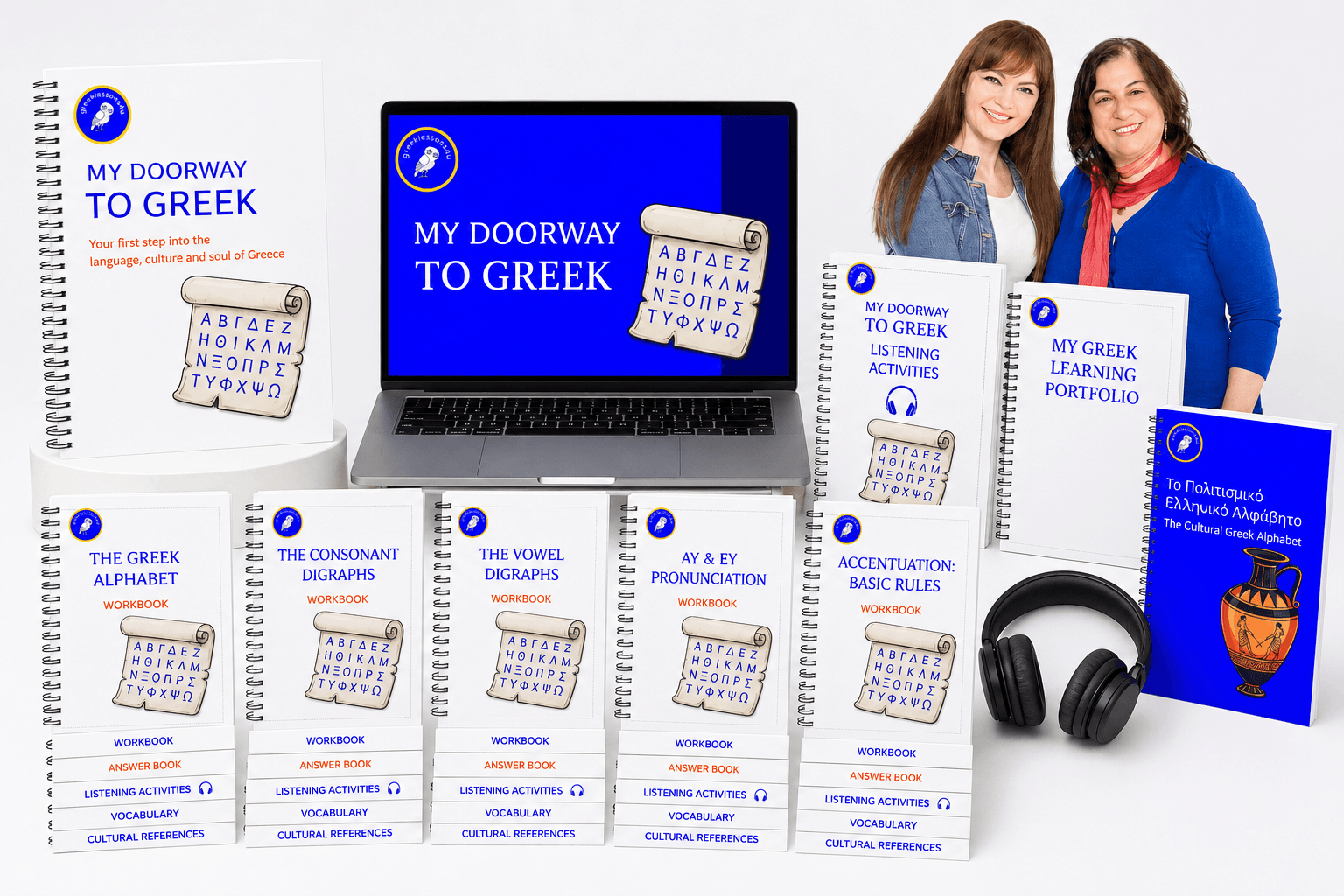
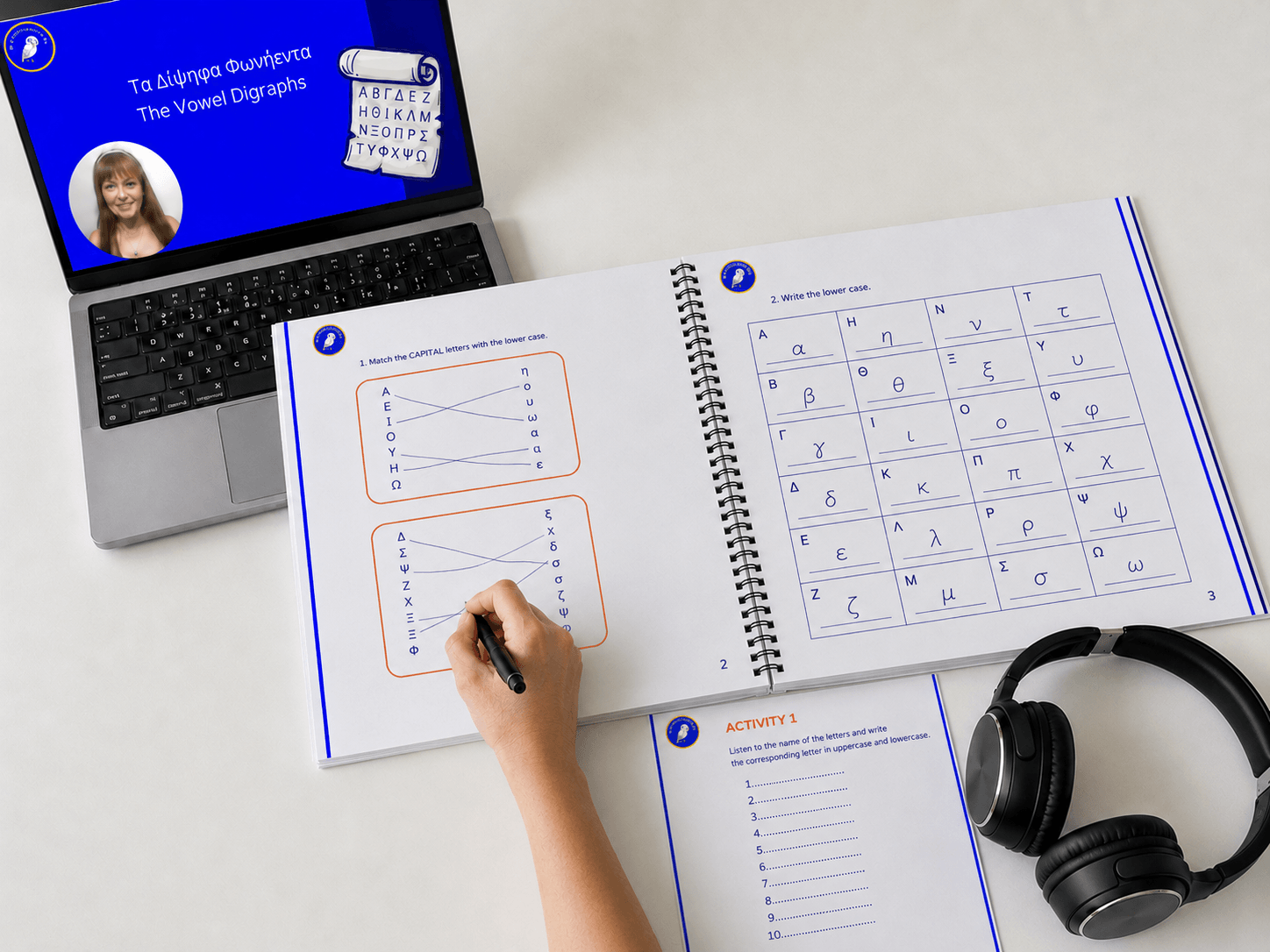
This exercise gives you a few words to try. In My Doorway to Greek, you follow a guided sequence through the alphabet, vowel and consonant combinations, αυ/ευ and word stress. Watch the video explanations, practise with interactive activities and listening exercises, then check your work in the answer books. The vocabulary sheets use the same pronunciation notation introduced here.
The course is self-paced and designed for complete beginners. It focuses on reading and pronunciation; it is not a complete A1 programme.
Explore the lessons and materials in My Doorway to Greek.
Learn more about Apostolia and Eleni, or ask us a question about the course.
Trackbacks/Pingbacks